Oliver McCourt
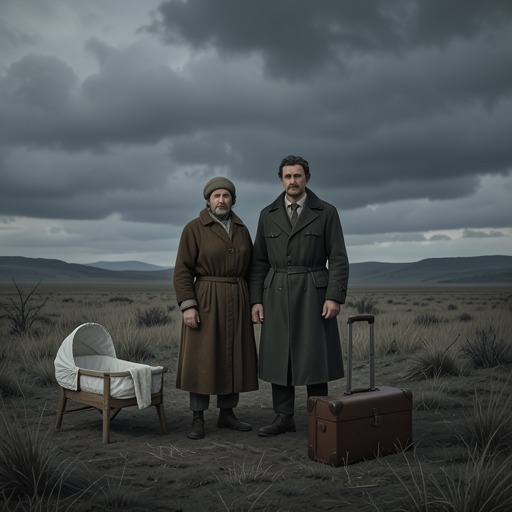
Angela's AshesOliver McCourt, the twin son of Angela McCourt and Malachy McCourt, is born into a family in Limerick already living with poverty, illness, and the loss of a child. His brief life is narrated chiefly through the care others try to give him: his mother watches over him, his father takes him to hospital, and his twin Eugene asks for him after he is carried away. Oliver’s death turns an infant’s illness into a defining family bereavement, remembered through the stark objects of a white coffin, a grave, and food promised but not secured.
Identity and Introduction
Oliver is one of the two new baby boys welcomed by the family. The neighbors admire the twins’ eyes, while the children’s arrival is folded into the household’s angel story: new babies, the family says, are brought in the night by an angel. That tender explanation sits beside the family’s material circumstances. The adults are trying to feed and warm several children, and Oliver’s infancy unfolds in a home where illness can quickly become a crisis.
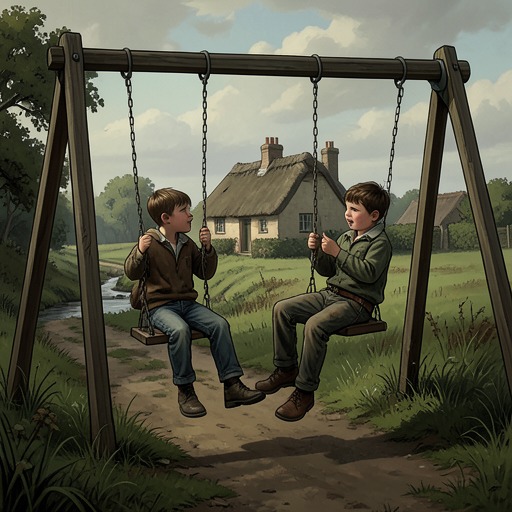
His twin, Eugene, is already a distinct presence in the scenes of Oliver’s illness. When Angela and Malachy take Oliver away, Eugene stands on the bed and asks for Ollie to play. The short, childlike plea makes clear what the journey to the hospital means to the children left behind: Oliver is not simply a sick baby but Eugene’s companion, suddenly absent from the bed and the room.
Illness and the Journey to Hospital
Oliver’s condition worries Angela through a day of household labor and scarcity. She has been to the St. Vincent de Paul Society and Mrs. McGrath’s shop, searched for coal along Dock Road, and worried that he will not eat the boiled onion. She says that if he is still ill the next day, she will take him to the doctor. The fire’s warmth briefly gathers the family together, but Oliver’s small cries continue through the night.
In the morning, Malachy is already dressed and preparing tea and bread when he tells Frank that Oliver is sick and that he and Angela are taking him to hospital. He asks Frank to behave and care for his two brothers, promising that they will return soon. Angela carries Oliver wrapped in a coat; Eugene gets up on the bed, calling after his twin. The ordinary instructions about looking after the children and rationing sugar accompany the departure, binding the emergency to the family’s everyday lack of money.
Death and Burial
The parents return with the news that Oliver is dead. Frank first approaches the crisis through the immediate need to make a fire and find something to eat: the family has gone too long without porridge, and he thinks he can light the grate if his father moves away from it. Malachy, beating his thighs beside the fireplace, tells him that Oliver is dead, along with his baby sister. The collision between the child’s practical hunger and the father’s announcement gives the loss its full force without separating grief from deprivation.
Malachy lifts Frank and holds him so tightly that Frank cries. Malachy, Angela, Malachy Jr., and Frank cry together, while Eugene remains quiet. Malachy then proposes that he and Frank go out to get food. Carrying his son through Limerick, he asks shopkeepers to help a family that has lost two children in a year, one in America and one in Limerick, and fears losing the three who remain for want of food and drink. Most refuse and direct him instead to public assistance or the St. Vincent de Paul Society. The bereavement therefore leads directly into a search for food, not a pause from want.
The next day, Oliver is taken to the graveyard in a horse-drawn carriage, in a white box that travels with the family. Angela and Aunt Aggie cry; Grandma looks angry; Malachy, Pa Keating, and Pat Sheehan look sad but do not cry. Frank interprets the men’s restraint through what he has seen of adult grief and drinking, imagining that a man can cry only after drinking a pint. At the grave, he throws a rock at a jackdaw approaching the burial place. Malachy says the birds might be somebody’s soul, but Frank, not knowing what a soul is and not wanting to ask, wants only to keep them away from Oliver. He imagines returning one day with a bag of rocks to kill them.
Family Memory and Aftermath
The burial does not resolve the family’s practical crisis. The following morning Malachy goes to the Labour Exchange to collect the week’s dole, nineteen shillings and sixpence. He promises to return by noon with coal and to prepare rashers, eggs, and tea in Oliver’s honor, perhaps even a sweet. The promised meal gives mourning a domestic form, but the family’s dependence on relief and the father’s uncertain drinking make that promise precarious.
Oliver’s death remains present in Frank’s later understanding of his father. When Frank finds Malachy drinking money intended for the new baby, he thinks of the look in Eugene’s eyes when Eugene searched for Oliver. The recollection links the baby’s death to the surviving twin’s earlier distress and to the family’s continuing instability: the loss is not confined to the burial scene but returns as a measure of what the father’s drinking costs his children.
Narrative Significance
Oliver has little spoken presence, yet the account of his short life is organized around sharply concrete acts of care and failure: Angela’s vigil over food and illness, Malachy’s hurried departure, Eugene’s call from the bed, Frank’s attempt to light the fire, and the search for bread after the death. These details prevent the loss from becoming an abstract tragedy. In the McCourt household, sickness, hunger, and mourning occupy the same room.
The contrast between the family’s angel story and the white box carried to the graveyard gives Oliver’s brief appearance its particular poignancy. The children’s explanation for new babies offers a way to imagine arrival; Frank’s memory of the burial records the material fact of departure. Oliver’s death also gives the twins’ bond a lasting shape in the narrative: Eugene’s request for his brother to play, his silence when the family cries, and the later recollection of his searching look carry the absence forward into the lives of those who remain.